Lesson 1 of 6
SI units.
Every measurement is a number and a unit: seven base units, prefixes from nano to giga, units built from the base units, and checking a formula by its units.
Step 1 of 6 · A number and a unit
Step 1 of 6
A number and a unit
To measure is to compare with a unit. When you say a table is 2 m long, you say it is times as long as one metre. Without the unit the number says nothing: what? Metres, feet or paces?
So that everyone measures in the same units, science uses the International System of Units, the SI. It has seven base units, and three of them come up throughout mechanics:
- length: the metre, m
- mass: the kilogram, kg
- time: the second, s
The other four are the ampere (electric current), the kelvin (temperature), the mole (amount of substance) and the candela (brightness of light). Every other unit is built from them.
Step 2 of 6
Nanometres
The SI prefixes are short names for powers of . You met kilo, centi and milli in the Unit on ratio and scale. For very small and very large things there are more:
| Prefix | Symbol | Times |
|---|---|---|
| giga | G | |
| mega | M | |
| kilo | k | |
| milli | m | |
| micro | µ | |
| nano | n | |
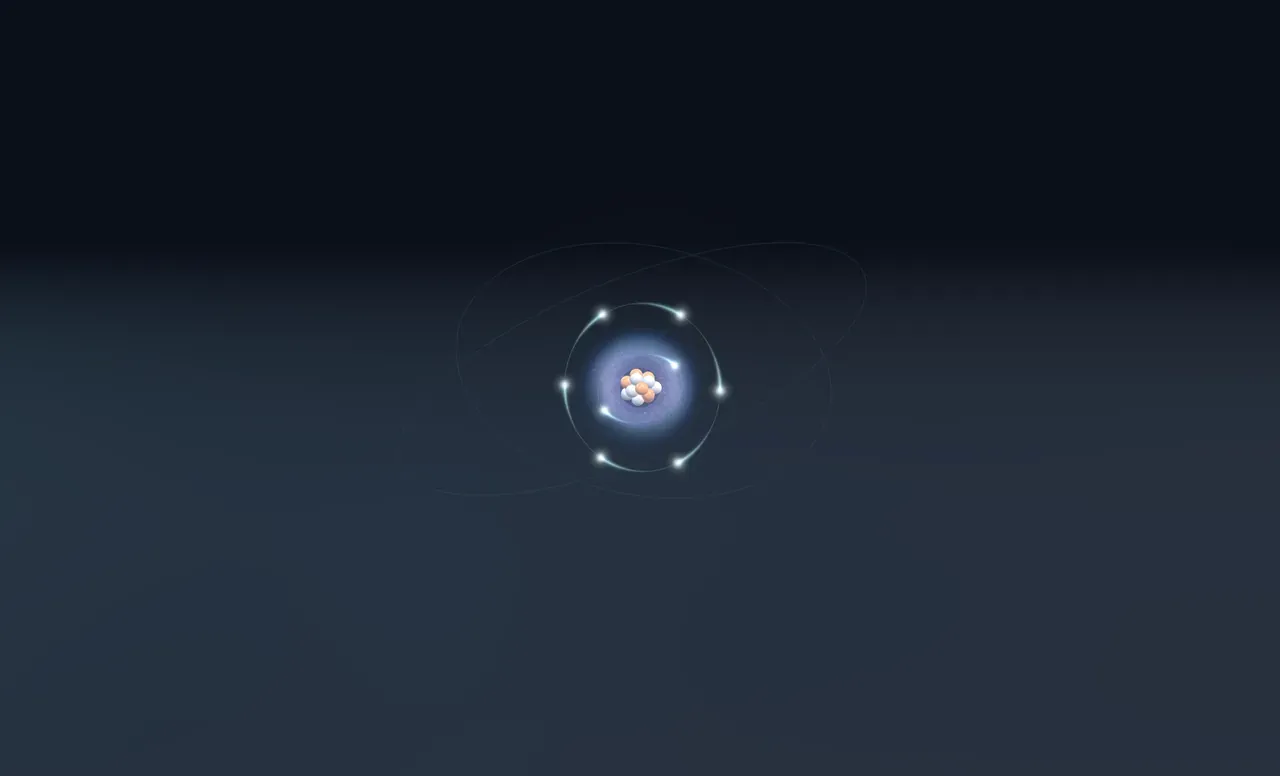
A nanometre, 1 nm, is metres, a billionth of a metre. The scene is now at DNA, two billionths of a metre wide.
Step 3 of 6
Micrometres
The scene has moved on to the next stop, the cell. A cell is a hundredth of a millimetre wide, 0.01 mm. For a size like that there is a handier unit: the micrometre, 1 µm, a millionth of a metre. A millimetre has micrometres, because .
Step 4 of 6
Gigametres
Very large things have prefixes too. The Sun is one million four hundred thousand kilometres across, kilometres. A gigametre, 1 Gm, is metres. To get there, go first to metres, the base unit, and from there to gigametres.
Step 5 of 6
Derived units
Most units in physics are not base units but derived units, built from them. Speed is length divided by time, so its unit is metres per second, m/s. Area is length times length, m².
The scene has one of these too: Solar System clock is measured in days per second, how many days of orbit pass each second on the screen. Change it and watch the planets speed up.
Acceleration is the change in speed each second: by how many metres per second the speed grows every second.
Step 6 of 6
Checking by units
Units are also a way to check. Both sides of an equation must have the same units, and you can add or subtract only quantities of the same kind: metres to metres, seconds to seconds. When you put units in place of numbers, they behave like letters in algebra: they cancel when you divide and combine when you multiply.
If a formula you wrote comes out in seconds where it should give metres, it is wrong, before you have put in a single number.
Loading the interactive version…
Loading the interactive version…
Each step sets up the Scene for you, and a control marked “fixed” stays put for that step.
Practice · Choose
What is the SI base unit of mass?
Practice · Choose
What is the SI base unit of mass?
Practice · Calculate
DNA is metres wide. How many nanometres is that?
Practice · Calculate
DNA is metres wide. How many nanometres is that?
Practice · Calculate
A cell is 0.01 mm wide. How many micrometres is that?
Practice · Calculate
A cell is 0.01 mm wide. How many micrometres is that?
Practice · Calculate
The Sun is kilometres across. How many gigametres is that?
Practice · Calculate
The Sun is kilometres across. How many gigametres is that?
Practice · Choose
What is the SI unit of acceleration?
Practice · Choose
What is the SI unit of acceleration?
Practice · Choose
A car travels at speed , in metres per second, for a time , in seconds. Which formula can give the distance it covers, in metres?
Practice · Choose
A car travels at speed , in metres per second, for a time , in seconds. Which formula can give the distance it covers, in metres?
Lesson complete. Every practice question here is done.