Follow one rock round the cycle: magma that cools into granite, sand pressed and cemented into sandstone, and burial that heats it by 25 °C a kilometre, until it is transformed and finally melts.
Step 1 of 6 · Three families
Step 1 of 6
Three families
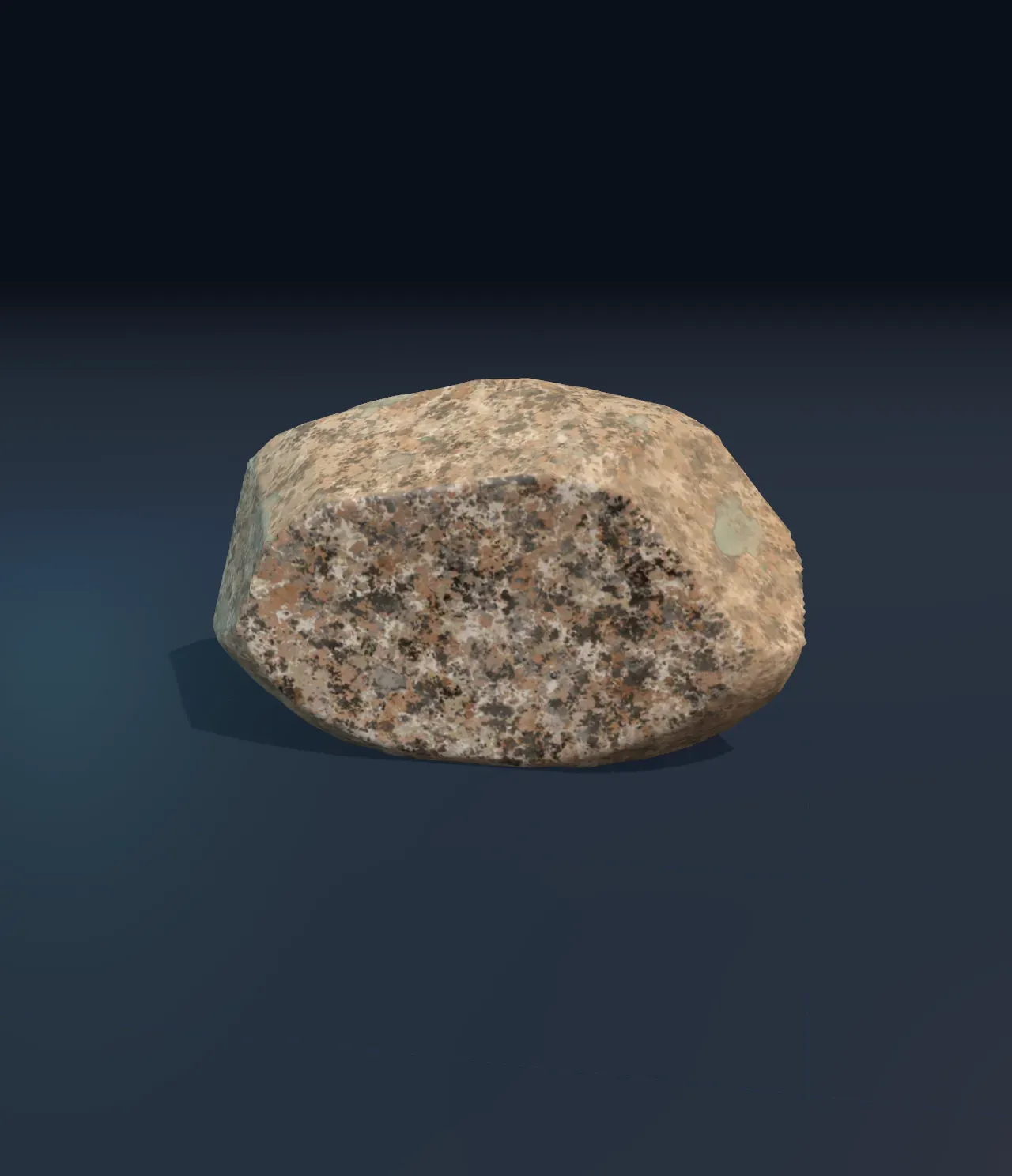
In the dynamic Earth Lessons we saw plates meet, sink and build mountains. This Lesson follows what happens along the way to the rock itself. In the Scene there is one piece of rock, and Round the cycle leads it from form to form. Now it is at Igneous: granite, with light and dark crystals.
Step 2 of 6
Big crystals and small
As magma cools, its atoms arrange themselves into crystals of minerals: quartz, feldspar and mica. Magma cooled at is now zero: lava that flowed out on the surface.
Step 3 of 6
Sand and sandstone
Round the cycle has passed Sediment and reached Sedimentary. The granite was raised to the surface, and rain and rivers broke it into sand, which was carried away and laid down in layers.
Step 4 of 6
Heat at depth
When plates collide, layers of sedimentary rock are forced deep into the roots of the mountains. The deeper you go, the hotter the rock: heat rises from the Earth’s interior, and the crust holds radioactive elements that give off heat. The chart beside the Scene shows how the temperature rises with depth. Sandstone buried to is locked.
Step 5 of 6
Metamorphism
With heat and pressure the rock changes without melting: metamorphism. The hotter it gets, the deeper the change, and each range of temperatures has its own metamorphic rock.
Step 6 of 6
Melting
At 24 km the rock is gneiss, with bands of light and dark minerals. It is already close to the temperature at which it starts to melt.
Loading the interactive version…
Loading the interactive version…
Each step sets up the Scene for you, and a control marked “fixed” stays put for that step.
Practice · Choose
Geologists sort all rocks into three families: igneous, sedimentary and metamorphic. What decides a rock’s family?
Practice · Choose
Geologists sort all rocks into three families: igneous, sedimentary and metamorphic. What decides a rock’s family?
Practice · Predict, then look
The rock in the Scene is lava that cooled at the surface: rhyolite, with tiny crystals. Predict: what will happen to the crystals if the same magma cools 7 km down?
Practice · Predict, then look
The rock in the Scene is lava that cooled at the surface: rhyolite, with tiny crystals. Predict: what will happen to the crystals if the same magma cools 7 km down?
Practice · Choose
The sand worn from the granite settled in layers and was buried. How does it become sandstone?
Practice · Choose
The sand worn from the granite settled in layers and was buried. How does it become sandstone?
Practice · Calculate
Sandstone buried to is locked at 16 km, in the root of a mountain belt. At the surface the temperature is 15 °C, and in continental crust it rises by about 25 °C every kilometre. What is the sandstone’s temperature at that depth?
Practice · Calculate
Sandstone buried to is locked at 16 km, in the root of a mountain belt. At the surface the temperature is 15 °C, and in continental crust it rises by about 25 °C every kilometre. What is the sandstone’s temperature at that depth?
Practice · Reach the target
The sandstone is now buried only 5 km, and stays sandstone. Change Sandstone buried to until it becomes schist, and press Check.
Practice · Reach the target
The sandstone is now buried only 5 km, and stays sandstone. Change Sandstone buried to until it becomes schist, and press Check.
Practice · Predict, then look
At 24 km the sandstone has become gneiss, at about 615 °C. Predict: what will happen to it if it is buried to 34 km?
Practice · Predict, then look
At 24 km the sandstone has become gneiss, at about 615 °C. Predict: what will happen to it if it is buried to 34 km?
Lesson complete. Every practice question here is done.